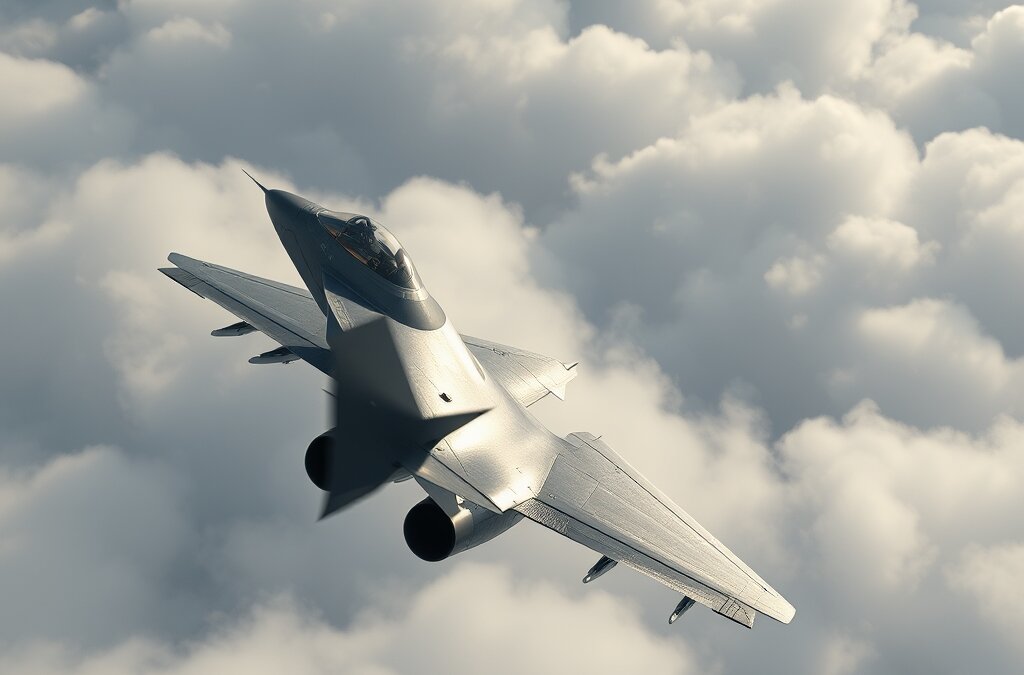
A Russian cruise missile entered Polish airspace on November 20, prompting a response from NATO fighter jets. Two Swedish Gripen fighters and Polish F-16s were scrambled to monitor the situation amid a large-scale Russian aerial assault on Ukraine.
One Swedish Gripen pilot approached the object, believed to be a Russian Kh-101 cruise missile, and received conditional authorization to engage. However, the pilot ultimately did not fire because poor weather conditions prevented positive identification of the target, according to Polish military officials.
This incident highlights how adverse weather can significantly complicate fighter jet operations. Factors such as heavy cloud cover, fog, and precipitation can reduce visibility and affect the electro-optical and infrared sensors used for target identification. While radar can track objects in poor visibility, this alone may not be sufficient to determine if a target is hostile.
Weather can also impact weapons accuracy, particularly for laser-guided munitions, and pose risks to flight safety. The US Air Force acknowledges that weather must be factored into military operations, as it can influence the effectiveness of aircraft and weapons systems, and even strategic planning.
Also read:AAP targets women voters with new slogan for 2027 Punjab polls
Source: timesofindia.indiatimes.com