

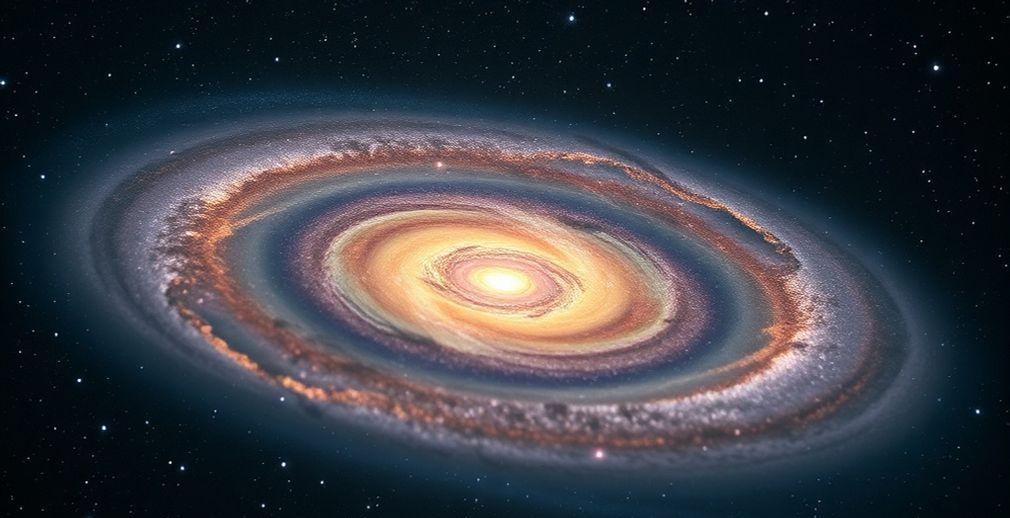
Astronomical research focuses on understanding Odd Radio Circles (ORCs), which are described as vast, faint circular radio sources typically observed around distant galaxies. This field also investigates radio galaxies, formed when active black holes emit plasma jets, resulting in the creation of two expansive "radio lobes."
The study of these galactic phenomena leverages innovative approaches, including the RAD@home citizen science program. This initiative involves researchers, such as Hota and collaborators, training participants to identify galaxy structures across various electromagnetic wavelengths. Crucial to these observations is the use of powerful instruments like the Giant Metrewave Radio Telescope (GMRT) near Pune.
Radio galaxies are categorized based on their shape and brightness, with astronomers identifying specific subtypes such as X-shaped, double-double, or giant radio galaxies, each indicating distinct episodes of jet activity. While it was once believed that spiral galaxies could not host such jets, ongoing research continues to evolve this understanding. One hypothesis, discussed by Hota, suggests that galaxy collisions may generate powerful shockwaves that propagate outward into intergalactic space, potentially contributing to the formation of these observed cosmic structures.
Source: https://www.thehindu.com/sci-tech/science/rad-at-home-hota-double-odd-radio-circles-citizen-astronomy/article70235060.ece