
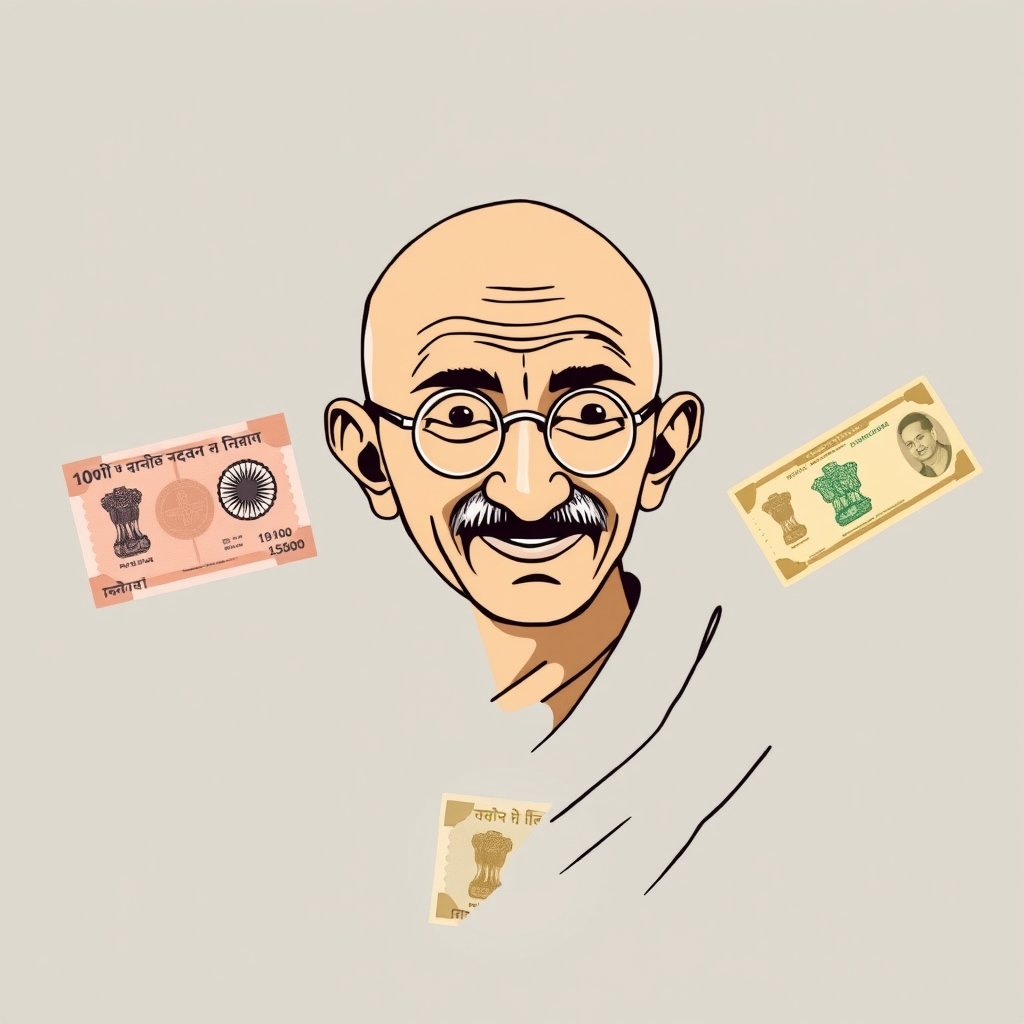
Mahatma Gandhi’s portrait was permanently featured on Indian currency notes in 1996, decades after India’s independence. The Reserve Bank of India (RBI), India’s central bank, is responsible for the design and issuance of banknotes.
The portrait used on the notes is a cut-out from a 1946 photograph of Gandhi standing with British politician Lord Frederick William Pethick-Lawrence. The photograph was chosen for Gandhi’s smiling expression. The specific photographer and the person who shortlisted the image remain unknown.
Before Gandhi’s image became a permanent fixture, Indian banknotes featured King George VI after independence. In 1949, the Lion Capital of Ashoka Pillar at Sarnath replaced King George VI as a watermark on the 1-rupee note. This symbol also appeared on the first Republic of India banknotes issued in 1950.
Gandhi first appeared on Indian currency in 1969 to commemorate his 100th birth anniversary. A special series of Rs 500 notes featuring Gandhi was launched in October 1987. In 1996, the RBI introduced a new series of banknotes with Gandhi’s portrait as a permanent feature, reportedly because a human face was considered harder to forge than inanimate objects.
In recent years, there have been suggestions to include other prominent figures on currency notes. However, the RBI has stated that no other personality better represents the ethos of India than Mahatma Gandhi.
Source: indianexpress.com